All-in-one washer-dryers promise one machine, no vent, and no lugging wet clothes between cycles. But not all combos are the same: heat pump models use a different (and far more efficient) drying system than conventional vented or condenser combos. So which one is a good fit—and when does the conventional combo still win?
Here’s the short version: heat pump all-in-ones save energy, need no vent, and plug into a standard outlet—great for apartments, small spaces, and “set and forget” loads. The trade-off is longer drying times (especially on towels and bedding) and a higher upfront price. Consumer Reports and ENERGY STAR both spell out the pros and cons; below is how it breaks down and how it ties into the habits that keep your laundry—and your washer and dryer—running smoothly.
How heat pump all-in-ones work (and why they’re different)
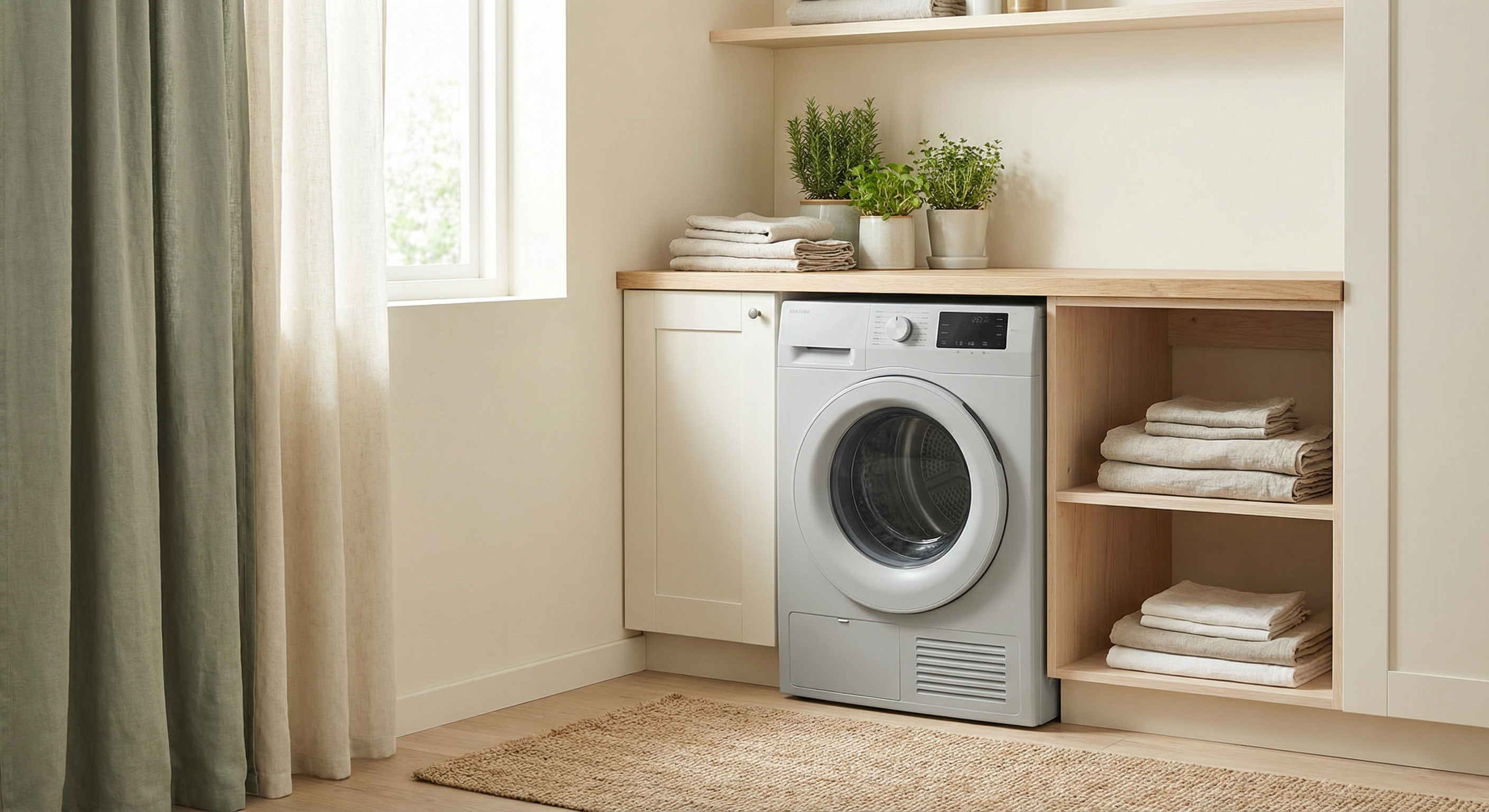
Heat pump washer-dryer combos dry clothes without venting hot, humid air outside. Instead, they use a closed-loop system: air is warmed, picks up moisture from the load, then passes through an evaporator that cools the air and condenses the water. That water is drained (or collected in a tank), and the cooled, dehumidified air is reheated and sent back through the drum. The same heat is recycled again and again—so the machine uses much less energy than a vented dryer that constantly blows hot air out the wall.
ENERGY STAR notes that certified heat pump dryers can use around 70% less energy than conventional electric dryers and may save more than $500 in electricity over the product’s life. Because they run at lower temperatures, they’re also gentler on fabrics—similar in spirit to using dryer balls instead of high heat and chemical softeners.
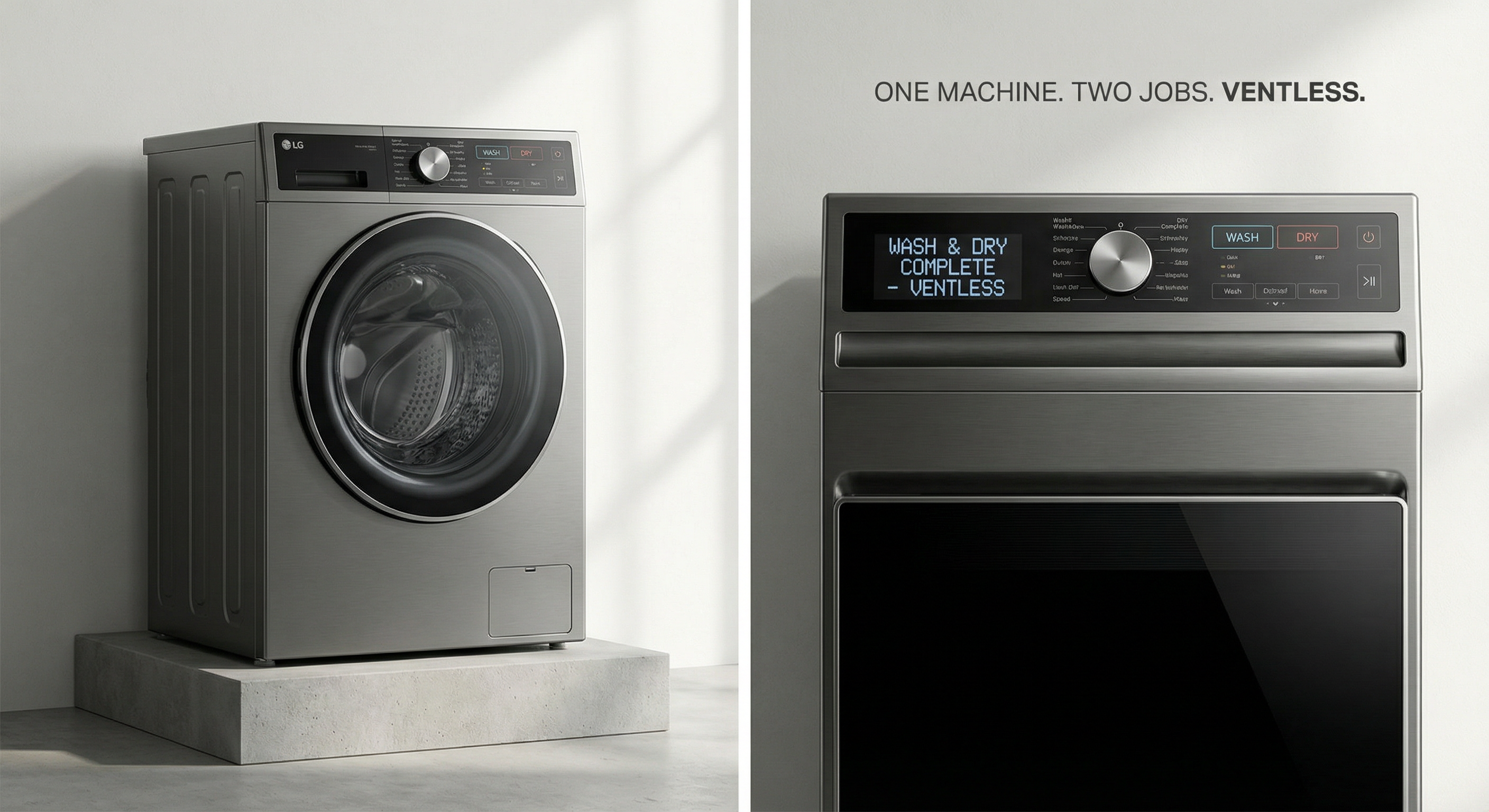
Ventless and plug-and-play: Heat pump combos don’t need an exhaust duct or a 240-volt outlet. They plug into a standard 120-volt outlet and need only water hookups and a drain—which makes them a strong option for renters, condos, and spaces where adding a vent isn’t practical. Efficiency Vermont highlights that ventless combos can use less than half the energy of a standard washer and dryer pair, and they’re easy to install (and uninstall) without ductwork or electrical upgrades.
How conventional combos compare
Conventional all-in-one washer-dryers usually rely on one of two drying methods:
- Condenser drying: Hot air absorbs moisture from the clothes, then passes over a cool heat exchanger that condenses the water so it can be drained. These models tend to run hotter and faster than heat pump units but use more energy.
- Vented drying: Some older or hybrid combos vent moist air outside, similar to a standalone dryer. They can dry faster but require a vent and often a 240-volt outlet—so they’re less flexible for small or rental spaces.
Consumer Reports testing finds that all-in-one combos are generally strong washers but often earn poor drying scores: drying a full load can take well over two to three hours in many combo units (both heat pump and condenser), compared with under an hour in a typical standalone dryer. Less voltage (120V vs 240V), smaller drum capacity (typically 4.5–5.3 cu ft vs 7–9 cu ft for standalones), and the physics of ventless drying all contribute. So “conventional” here doesn’t mean faster—it usually means different technology (condenser or vented) rather than better performance in a combo.
When a heat pump all-in-one is a good choice
A heat pump washer-dryer combo tends to make sense if:
- Space or venting is limited—apartments, condos, closets, or rooms where you can’t (or don’t want to) install a vent or 240V outlet.
- You’re renting and want something you can take with you or that doesn’t require landlord approval for ductwork or electrical changes.
- Laundry volume is light to moderate—you’re okay with longer cycle times and aren’t racing through multiple large loads per day.
- You like “set and forget”—one load in, wash + dry in the same drum, no transferring. That also avoids clothes sitting damp in the washer for hours, which can lead to odor and mildew if you forget to switch them.
- Energy cost and gentleness matter—you want lower bills and cooler, gentler drying for towels, delicates, and everyday wear.
Brands like GE Profile, LG, Samsung, and Whirlpool offer heat pump all-in-one models; ENERGY STAR certified units lock in the efficiency and savings claims above.
When to stick with a conventional combo or separate machines
A conventional combo (condenser or vented) or separate washer and dryer may be better if:
- Drying speed is top priority—you run lots of loads and need them done quickly. Standalone dryers (and some conventional combos) still dry faster than heat pump combos in real-world tests.
- You do large, bulky loads—comforters, heavy towels, bedding. Smaller combo drums (4.5–5.3 cu ft) and lower heat extend dry times; Consumer Reports notes that drying a 12‑pound load in a heat pump combo can take 3½ hours or more.
- Budget is tight upfront—heat pump combos often cost $1,700–$2,900 or more. Conventional combos and separate pairs can be cheaper to buy (even if they cost more to run). Rebates (e.g. Efficiency Vermont, state programs from the Inflation Reduction Act) can narrow the gap for heat pump models.
- You already have a vent and 240V and do heavy laundry—separate washer and dryer still offer the most capacity and the option to wash one load while another dries, which combos can’t do.
Maintenance matters either way: cleaning the washer (tub-clean cycle, door cracked, dispenser wiped), checking the filter where applicable, and using the right amount of detergent keep any combo—heat pump or conventional—running well and lasting longer.
Bottom line
Heat pump washer-dryer combos are a strong choice for space-limited, ventless, or rental setups and for households that value energy savings and gentler drying over speed. Conventional combos (condenser or vented) or separate machines still make sense when you need faster drying, larger capacity, or lower upfront cost. Pick based on your space, your laundry volume, and whether you’re willing to trade time for efficiency and flexibility—then pair whatever you choose with good habits: washer care, dryer balls instead of sheets where it helps, and proper detergent dosing so your laundry routine stays simple and your machines stay in good shape.
Sources
- Consumer Reports: Pros and Cons of All-in-One Washer-Dryer Combos (how combos work, heat pump vs condenser, drying times, capacity, installation, maintenance).
- ENERGY STAR: Save More On Laundry with a Heat Pump Clothes Dryer (efficiency, 70% energy savings, ventless installation, all-in-one benefits).
- ENERGY STAR: Heat Pump Dryer (how heat pump dryers work, moisture sensors, savings).
- Efficiency Vermont: How to save money and space with a heat pump washer-dryer (ventless, 120V, space-saving, rebates, who they’re right for).