That beloved bunny or teddy isn’t just cute—it’s a magnet for dust, dander, and germs. Kids sleep with them, drag them across floors, and snack while cuddling. Washing stuffed animals the wrong way can ruin them (or worse, leave them damp and musty). Do it right, and you keep favorites clean and lasting longer—without tears.
Here’s the short version: check the care tag, protect plush in a mesh bag or pillowcase, use a gentle cycle with cold water, and air dry (or tumble dry on low only if the tag says so) so glue and plastic parts don’t melt. How often? Weekly if they’re slept with or carried daily; at least monthly if they’re on the shelf—and always after illness. Martha Stewart and the American Cleaning Institute back that schedule; Whirlpool adds: wash more when they look dirty or smell. Below is a clear, step-by-step plan so you can wash stuffed animals safely and keep them fresh.
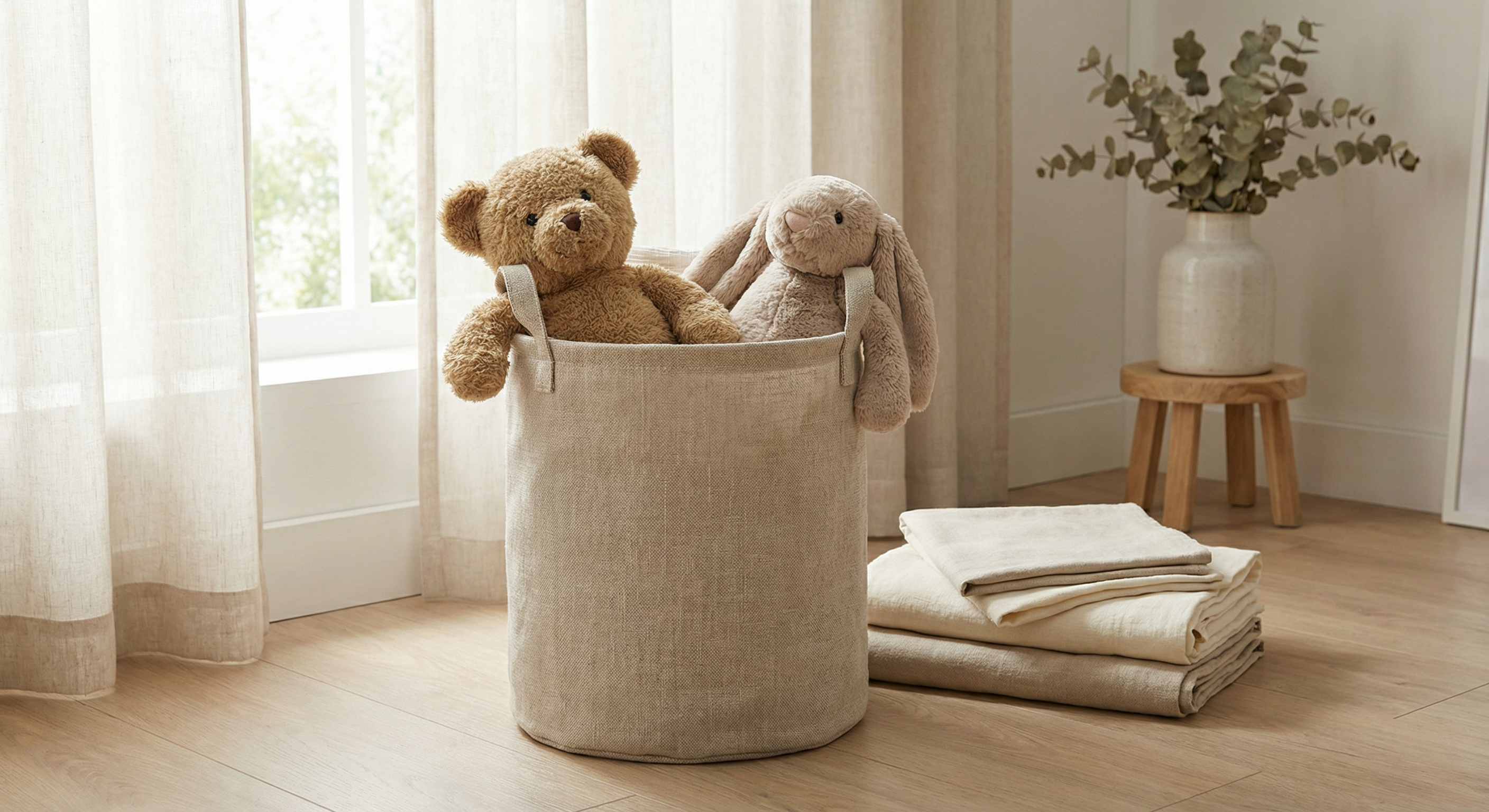
How often to wash stuffed animals
Frequency depends on use. Weekly is a good rule if your child sleeps with a plush or carries it around a lot. At least monthly for ones that sit on the shelf—and bump that up if anyone has allergies or asthma. Always wash after illness so germs and fluids don’t linger. When in doubt, wash when the toy looks dirty or smells; there’s no need to overwash if it’s rarely used and stays clean. For extra peace of mind after sickness, you can pair a gentle wash with disinfection habits that are safe for fabrics (e.g. warm water where the care label allows and a full, thorough dry).
Before you wash: check the care tag and skip the machine when needed
Read the care tag. If it says machine-washable and there are no delicate trims, you’re usually good for the washer. Do not machine wash (or fully submerge) stuffed animals that have:
- Glued-on eyes, sequins, glitter, or loose accessories that could fall off or snag
- Batteries, electronics, or mechanical parts—water can ruin them; spot clean only
- Very old or fragile construction—hand wash or spot clean instead
Whirlpool suggests a color test on a hidden spot: rub a small amount of diluted detergent on the fabric. If color transfers to the cloth, clean with water only to avoid fading or bleeding.
Remove any detachable parts (e.g. clothes, bows) before washing. Pre-treat visible stains with a dab of mild detergent or a gentle stain remover; avoid harsh bleach on plush.
How to wash stuffed animals in the washing machine
-
Put the stuffed animal in a mesh laundry bag or a pillowcase. If using a pillowcase, tie the opening with a knot or hair tie so the toy doesn’t tumble loose. The bag cushions the plush and reduces wear on eyes and seams.
-
Use the delicate or gentle cycle (or hand-wash cycle if your machine has one) with cold water. Cold helps prevent colors from fading and reduces the risk of shrinking or damaging fill and trim. Martha Stewart and experts recommend mild detergent; using the right amount matters—too much can leave residue that attracts dirt and odor, just like with towels and clothes.
-
Run the cycle, then remove the toy from the bag. Don’t leave it balled up and wet in the machine; that encourages mildew and can make your washer smell over time.
Drying: why air dry is usually best
Air drying is the safest default. High heat can melt glue, distort plastic parts, and damage delicate fabrics. Lay the stuffed animal flat or hang it in a well-ventilated spot; you can gently squeeze out excess water first (don’t wring). If the care tag allows tumble drying, use low heat and keep the plush in the mesh bag or pillowcase to protect it. Whirlpool notes that tumble drying is generally not recommended for most stuffed animals for this reason. Ensure it’s fully dry before putting it back on the bed—damp stuffing can grow mold and smell, similar to musty towels that don’t dry fully.
When to hand wash instead
If the stuffed animal is fragile, has glued or delicate details, or has no care tag and you’re unsure, hand wash:
- Fill a basin or sink with cold or lukewarm water and a small amount of mild detergent.
- Submerge the plush and gently squeeze the soapy water through the fabric; don’t scrub or wring.
- Rinse in clean water until no soap suds remain.
- Gently press out water (or roll in a clean towel to absorb moisture), then air dry in a ventilated spot.
For eyes, nose, and hard parts, use a cotton swab or soft cloth dampened with soapy water and wipe gently.
Spot cleaning for toys that can’t get wet
Stuffed animals with electronics, sound boxes, or “do not wash” labels should only be spot cleaned. Mix a little mild detergent with cool water, dab with a clean white cloth (white avoids dye transfer), and blot the stain. Wipe the area with a cloth dampened with plain water to remove soap, then let air dry. This keeps the toy usable without risking internal damage.
Odors and stains
Odors: If a plush still smells after washing, Martha Stewart suggests sprinkling baking soda over the surface, letting it sit for about 10 minutes, then shaking or vacuuming it off with a brush attachment. For persistent musty smell, ensure the toy dries completely after every wash and that your washer and laundry routine aren’t leaving residue behind—same principles as keeping towels fresh.
Stains: Pre-treat with a small amount of mild detergent or an enzyme-based stain remover suitable for the fabric, then wash as above. Avoid hot water and the dryer until the stain is gone; heat can set stains.
Stuffed animals can be washed safely in the washing machine when the care tag allows and there are no electronics or fragile trim. Use a mesh bag or pillowcase, gentle cycle, cold water, and the right amount of detergent—then air dry. Wash weekly if they’re in bed every night, at least monthly otherwise, and always after illness. When in doubt, hand wash or spot clean so the favorite stays in one piece and smells fresh.
Sources
- Martha Stewart: How to Wash Stuffed Animals the Right Way (frequency: weekly if slept with, monthly minimum; ACI guidance on allergies/illness; mesh bag, delicate cycle, cold water, mild detergent; tumble dry low in bag; hand wash and spot clean for delicate/electronics; baking soda for odors).
- Whirlpool: How to wash stuffed animals without ruining them (care tag, color test; mesh bag or pillowcase; Delicate/Hand Wash/Gentle cycle, cold water; air dry preferred; spot clean for batteries/electronics; when to wash after illness or when dirty/smelly).
- American Cleaning Institute (ACI): cited via Martha Stewart for frequency (minimum monthly, more if allergies/asthma, after illness).