You’ve got two options at the dryer: dryer sheets (or liquid softener in the wash) or dryer balls. Both aim to soften clothes and cut static, but they treat your machine—and your laundry—very differently.
Here’s the short version: dryer balls are generally better for your machine and for fabrics that need to stay absorbent or breathable. Dryer sheets (and liquid softener) leave residue that can coat the drum, clog the lint screen, and even mess with moisture sensors—leading to longer dry times and more wear on the appliance. Experts at The Cleaning Institute spell out why: sheets and softeners deposit chemicals that stick to towels (making them less absorbent), coat dryer sensors, and contribute to buildup. If you’ve ever dealt with musty towels or a funky washer, residue from softeners and overdosing detergent is often part of the story.
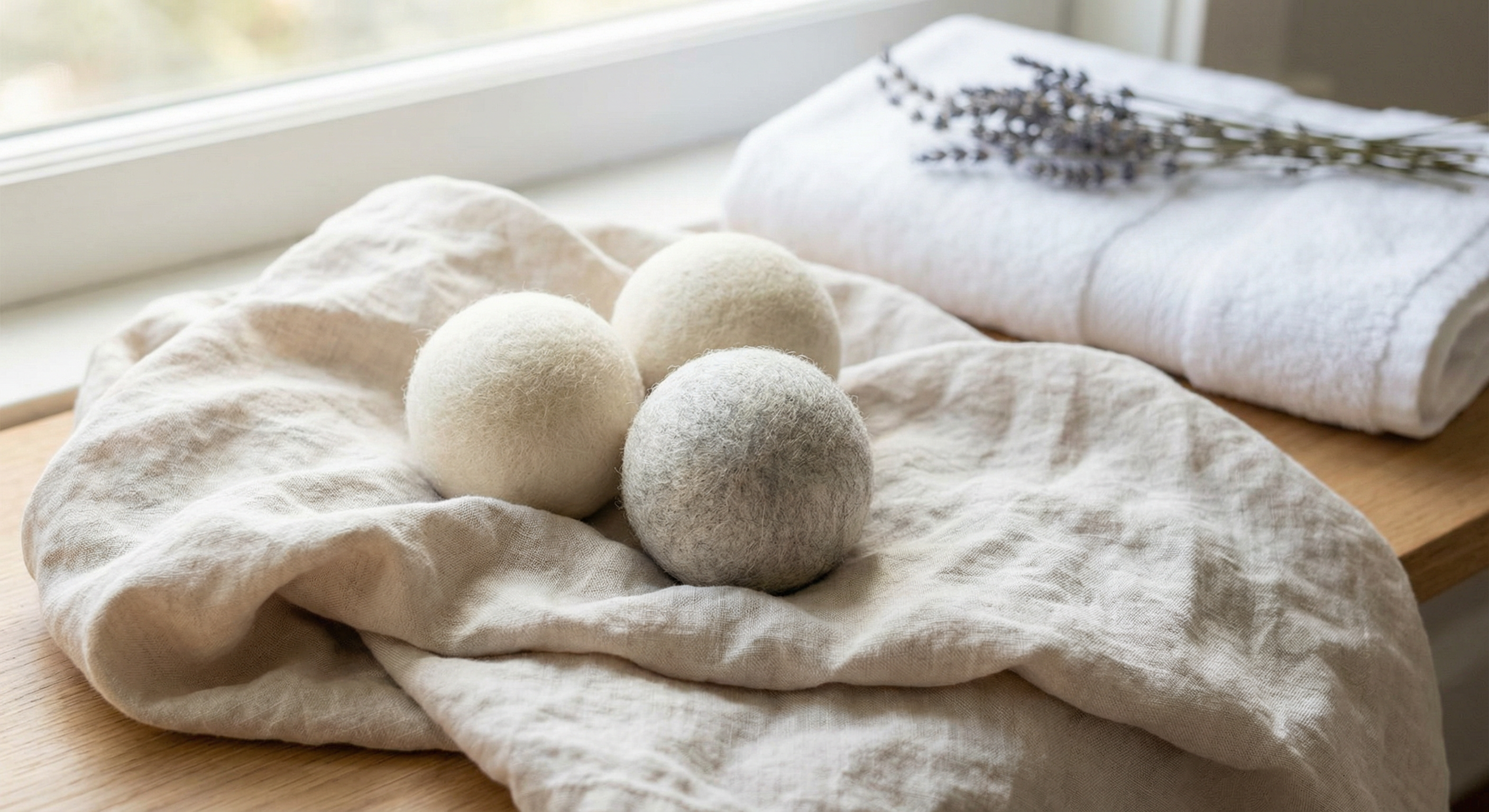
Below: how each option works, what it does to your machine, and how to choose (or switch) without drama.
What dryer sheets do (and what they leave behind)
- How they work: A sheet is coated with ingredients (waxes, fragrances, quats, etc.) that transfer to clothes in the heat of the dryer. That coating softens fibers and reduces static—and also sticks to the lint screen and the inside of the drum.
- Effect on the machine: That buildup can coat moisture sensors (used on “automatic” or “sensor dry” settings). Coated sensors misread dampness, so the dryer may run longer than needed—wasting energy and adding wear. Residue on the lint screen restricts airflow and also lengthens dry times. The Cleaning Institute recommends testing your lint screen regularly: hold it level, pour about half a cup of water over it; if water doesn’t pass through easily, the screen needs cleaning.
- Effect on clothes: The same coating that softens can make towels less absorbent and can reduce wicking on activewear. The American Cleaning Institute’s guide to fabric softeners and enhancers explains how softeners work and how buildup affects fabrics and machines.
So: dryer sheets do soften and scent, but the trade-off is residue on the dryer (and often on the washer if you use liquid softener there—same residue story as overdosing detergent).
What dryer balls do (and why machines like them)
- How they work: Wool (or plastic) dryer balls tumble with the load, lifting and separating clothes so more air gets between them. No coating is deposited—just mechanical fluffing. Result: often shorter dry times, less tangling, and softer-feeling laundry without a chemical film.
- Effect on the machine: No residue on the drum or lint screen, and no coating on moisture sensors. Dryer runs as intended, and lint screens stay easier to keep clear. Less buildup means one less contributor to washer or dryer odor when we’re talking about habits that carry over (e.g. liquid softener in the wash).
- Effect on clothes: Towels stay absorbent; activewear keeps wicking. You don’t get the “fresh scent” of a sheet unless you add a drop or two of essential oil on the balls (use sparingly and only if you’re okay with scent).
Wool dryer balls are durable—often 1,000+ loads or several years—so they cut down on single-use waste and ongoing cost compared with sheets or liquid softener.
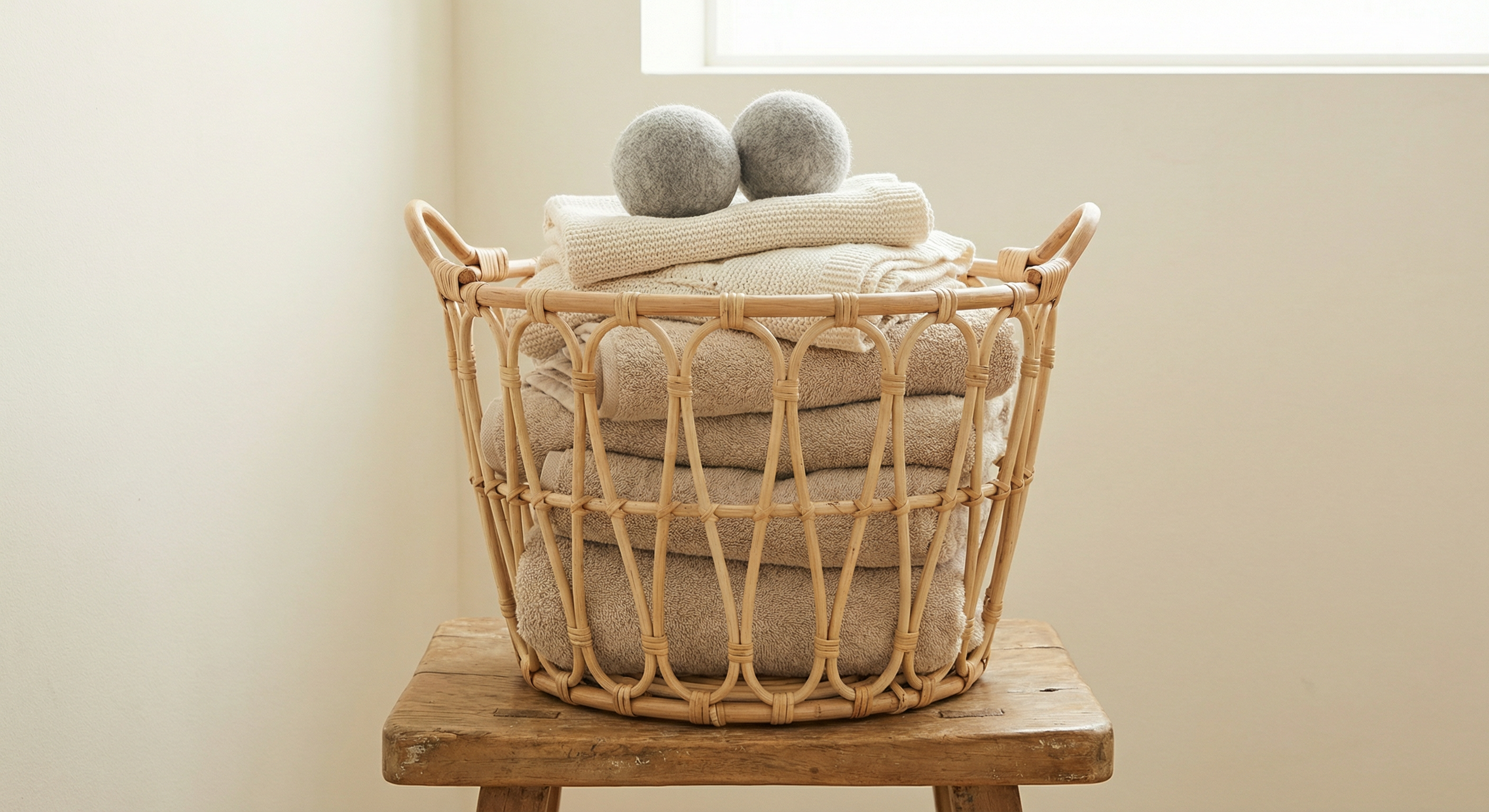
Side-by-side: machine and laundry
| Dryer sheets / liquid softener | Dryer balls | |
|---|---|---|
| Lint screen | Residue can clog it; longer dry times | No coating; screen stays clearer |
| Moisture sensors | Can be coated; dryer may over-dry | Unaffected |
| Drum | Residue buildup over time | No residue |
| Towels / absorbent items | Can reduce absorbency | No coating; absorbency preserved |
| Static | Reduced by coating | Reduced by separation and tumbling |
| Scent | Yes (from product) | No (unless you add essential oil) |
| Cost / waste | Ongoing purchase; more packaging | One-time (or rare) purchase; minimal waste |
Bottom line for your machine: Dryer balls are the better choice for appliance care—less residue, fewer sensor issues, and often shorter, more efficient dry cycles.
How to switch without wasting what you have
- Use up sheets sparingly: If you still have dryer sheets, use half a sheet per load or reuse one for two loads to reduce residue. Avoid using them with towels and athletic wear if you care about absorbency and wicking.
- Add dryer balls: Use 3–6 wool balls per load (or follow the ball product’s instructions). You can run balls with a half-sheet for a while if you want to ease off sheets gradually.
- If you use liquid softener: Consider skipping it for towels and activewear; musty towels often improve when you cut softener and get detergent dosing right. Diluting liquid softener (e.g. 6:1 water to softener) can reduce buildup in the washer dispenser and tub—per The Cleaning Institute, undiluted softener can block dispensing ports and contribute to odors.
Quick FAQ
“Do dryer balls actually shorten dry time?”
Yes. By separating clothes and improving airflow, wool dryer balls often shorten drying time. Less lint-screen and sensor residue also helps the dryer run efficiently.
“What about static?”
Dryer balls reduce static by physically separating items so they don’t cling as much. If static is still an issue, try smaller loads or a slightly damp towel for part of the cycle; avoid adding a dryer sheet “just for static” if you’re trying to protect your machine and towels.
“Can I use dryer balls with towels?”
Yes. Dryer balls are a good match for towels—they fluff and soften without coating fibers, so towels stay absorbent and are less prone to buildup that can lead to odor.
“Will my laundry smell less ‘fresh’?”
You won’t get the same perfumed scent as with sheets or liquid softener. If you want a light scent, add one or two drops of essential oil (e.g. lavender, citrus) to the wool balls occasionally—not every load—to avoid buildup on the balls.
Sources
- The Cleaning Institute: Fabric Softener Sheets Vs. Dryer Balls (residue on clothes and washer tub; sheets coating towels and moisture sensors; lint screen clogging; wool dryer ball benefits and longevity).
- American Cleaning Institute (ACI): Fabric Softeners and Enhancers: A Comprehensive Guide (how softeners work; effects on fabrics and machines; dilution guidance for liquid softener).